
Parental Guidance
The Guidance section offers content for parents. It helps parents step back from everyday situations, understand recurring difficulties, and think about small concrete changes to try at home.
Content can vary depending on the onboarding choices: ADHD profile or mental health profile. With an ADHD profile, modules include summaries inspired by Barkley-style parent guidance. With a mental health profile, Lusha offers parental content adapted to the needs selected during onboarding, so the program stays coherent with the family situation.
Why Barkley is a useful reference
Section titled “Why Barkley is a useful reference”The Barkley program is a behavioral parent guidance approach designed for families of children with ADHD and/or oppositional difficulties. It starts from a simple and often reassuring idea for parents: difficult behaviors are not only a matter of willpower. They can be linked to self-regulation, attention, time perception, and the need for very clear and immediate consequences.
In Lusha, this content helps you better understand what may be happening in difficult everyday moments: when you need to repeat yourself several times, when an instruction seems to be forgotten as soon as it is given, when an emotion overflows, or when the relationship becomes tense. The goal is to give you concrete reference points to clarify expectations, reinforce helpful behaviors, structure the environment, use coherent rewards, and reduce escalation.
These modules are informational: they do not replace professional support, but they can help you observe situations with more perspective and try small, realistic adjustments at home.
Access the modules
Section titled “Access the modules”To access the content, open the Guidance tab. Several modules are available and can be completed gradually. In the ADHD example, the program includes 12 modules, with an introduction, an explanation of ADHD, and tools such as a reward system.
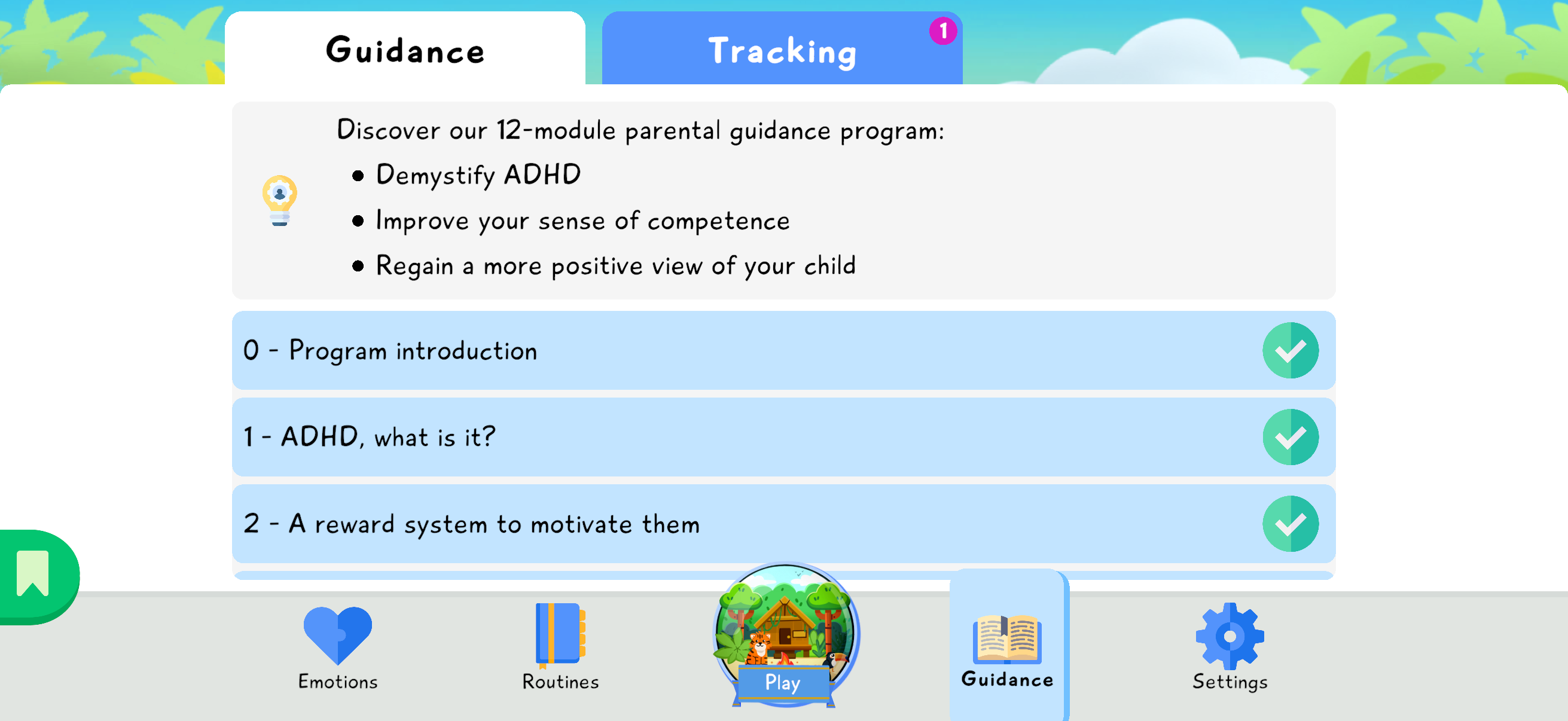
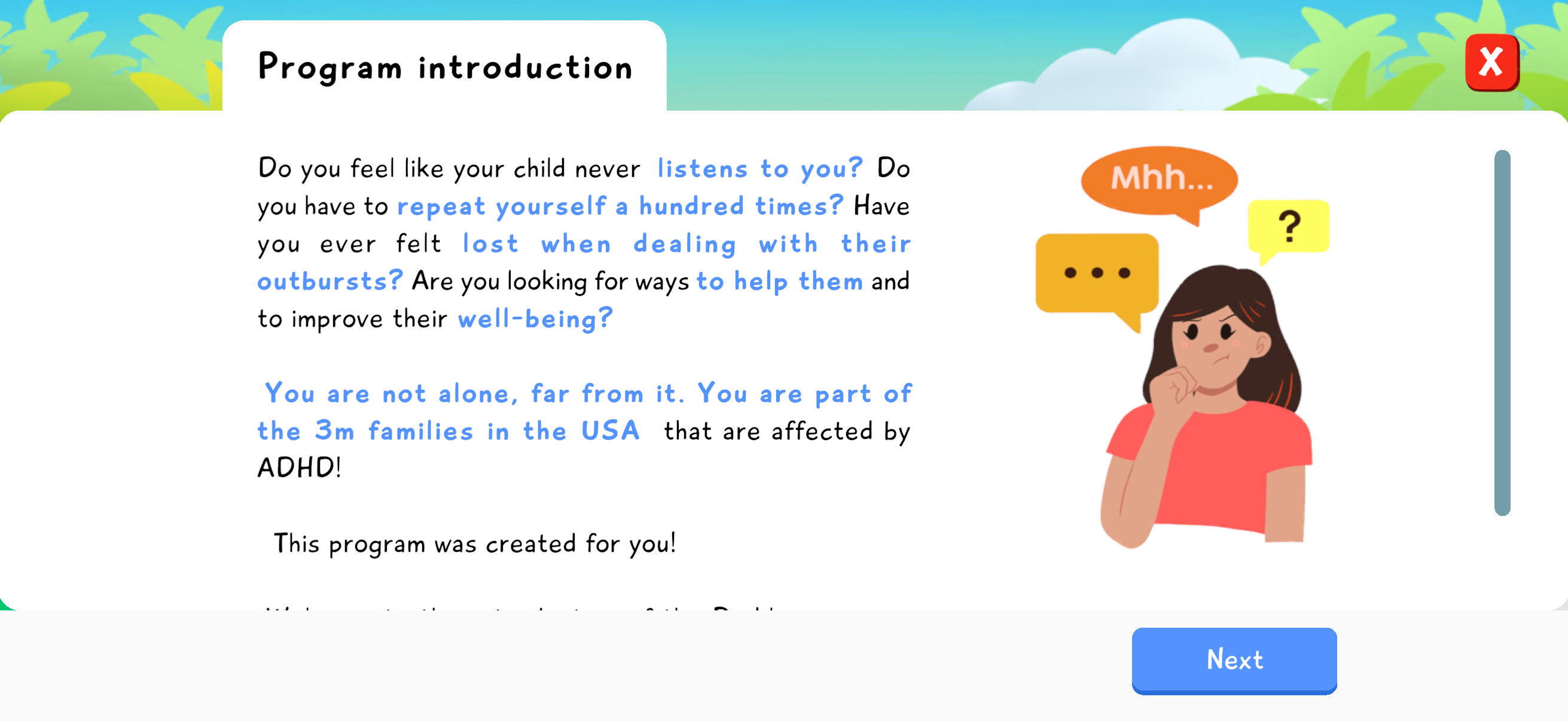
Each module can be read at your own pace. The introduction helps you recognize common situations: having to repeat yourself often, feeling lost during outbursts, and looking for ways to help your child and improve their well-being.
End with personal reflection
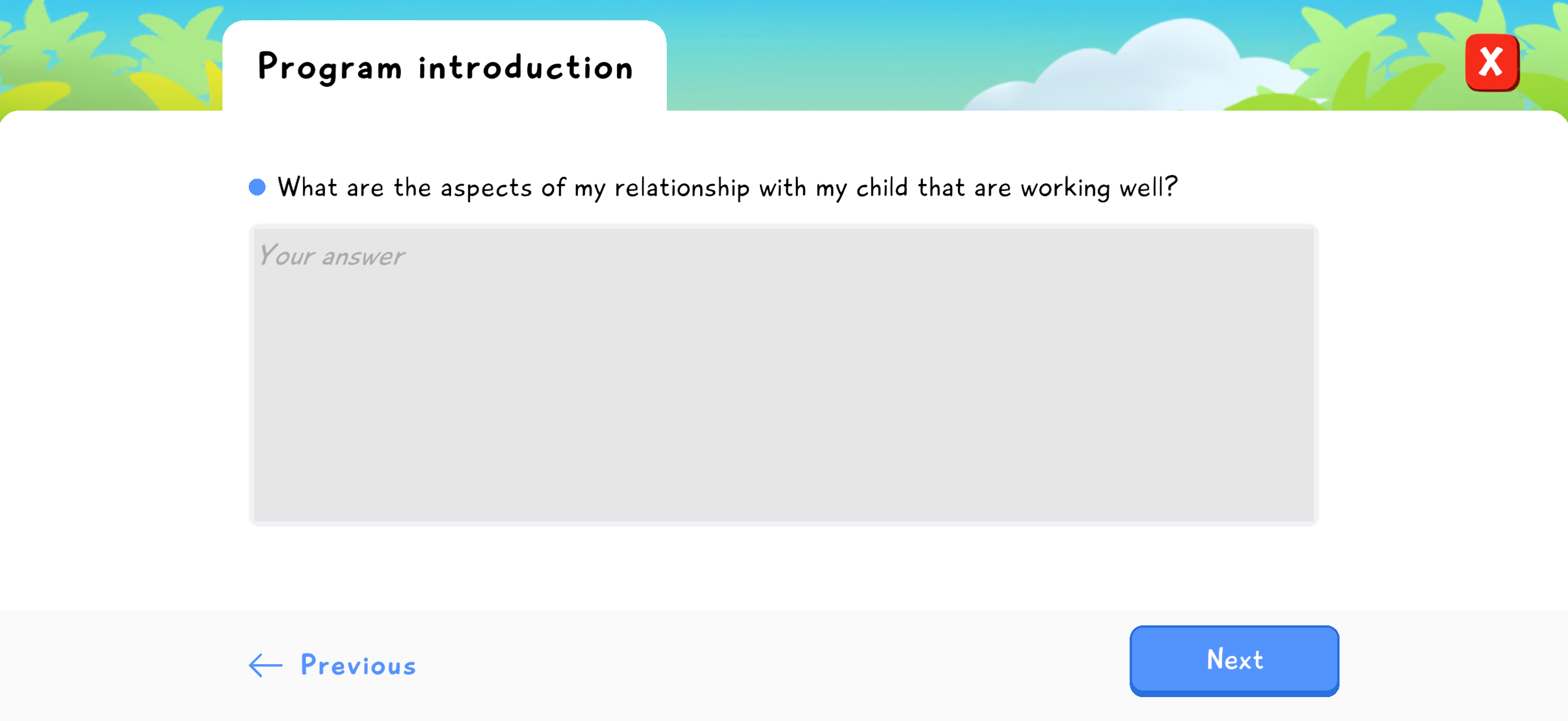
Section titled “End with personal reflection”Modules end with a short personal reflection exercise. The goal is not to find the right answer, but to help the parent connect the module content with their own relationship with their child.
These questions invite parents to identify what already works, what could be adjusted, and which small change to try first. They can also help prepare a discussion with another parent, a professional, or a trusted person.
Good practices
Section titled “Good practices”- Take time to reflect on each module before moving to the next one.
- Try small changes and observe how your child reacts.
- Keep what supports the parent-child relationship and adjust what creates too much tension.
- Talk with other parents to share feedback and experience.
- If a family situation becomes too difficult or worrying, seek professional advice.