Progression and Exploration in Lusha's World
In Lusha, player progression is built around an adventure loop: explore the jungle, collect resources, craft or repair useful elements, unlock new places, then return to camp to prepare for the next outing. This progression stays connected to the child’s real daily life, because routines, challenges, and learning activities can provide the resources needed to keep exploring.
This page presents the game mechanics tied to Lusha’s world.
Starting Exploration
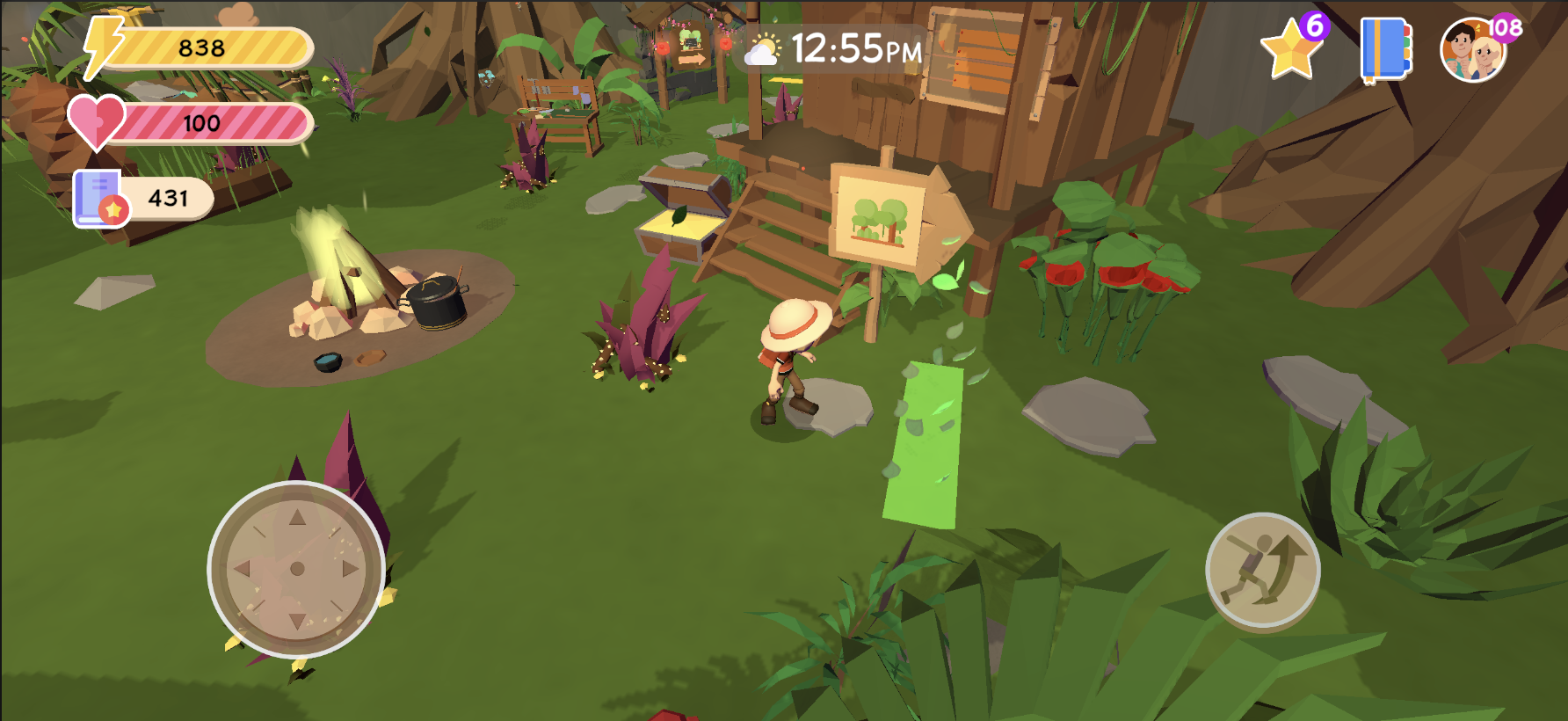
Section titled “Starting Exploration”Exploration starts from the camp. The player takes the exit on the right, shown by a green mat with leaves. If no routine is in progress and the character has at least 1 energy point, the jungle map opens.
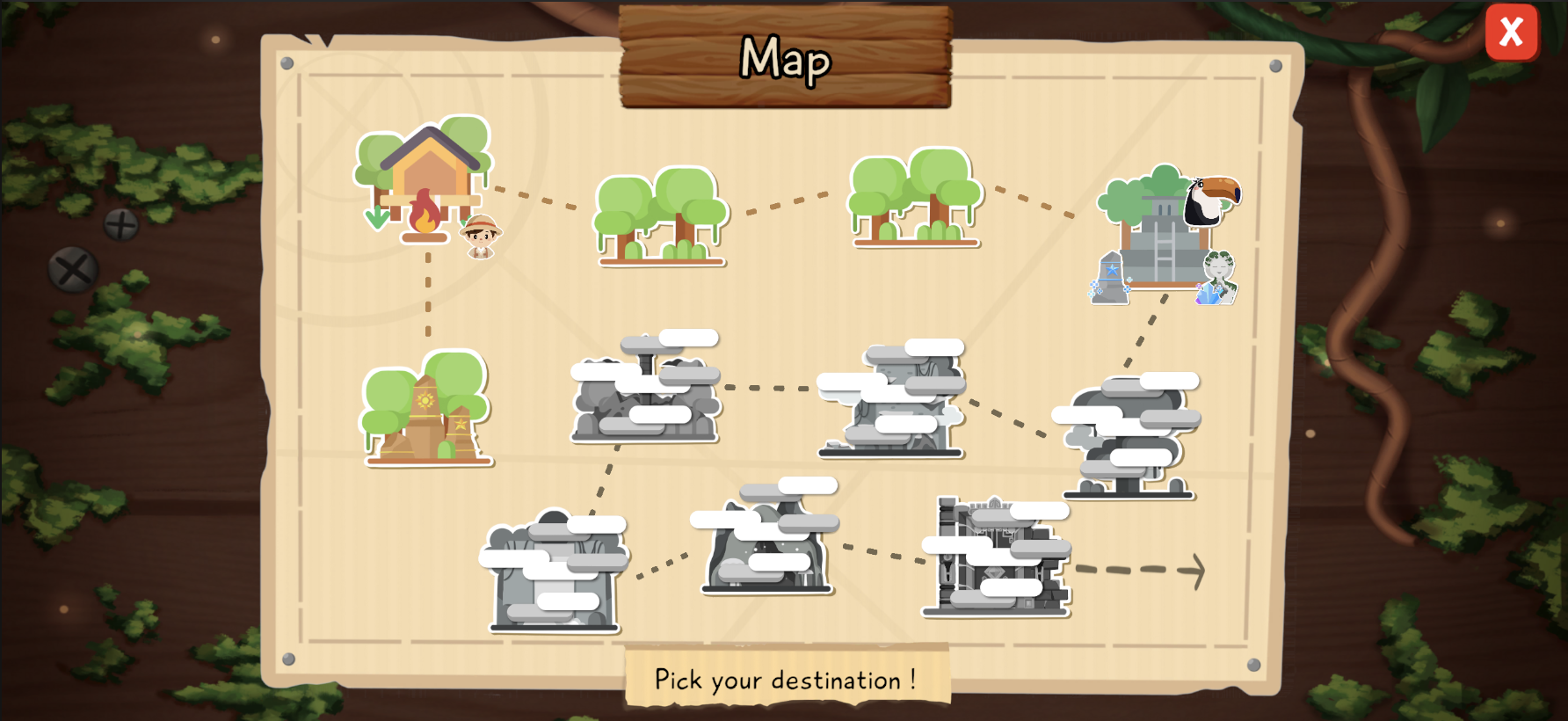
From this map, the player chooses the region they want to explore. Regions are not all available from the start: they unlock gradually as the adventure progresses. To open a new region, the player must reach the end of the previous one.
In exploration areas, region entrances and exits are also shown by green mats. This visual marker helps the child understand when they are leaving an area, returning to the map, or moving toward a new part of the jungle.
Character Attributes
Section titled “Character Attributes”The character has several attributes that structure progression. They influence what the child can do in the game.
Energy
Section titled “Energy”Energy represents the character’s ability to explore. It decreases gradually when the player spends time in the jungle, outside rest areas such as the camp, Tara’s School, or the cabin.
 Energy
The consumption rate depends on the screen-time settings chosen by the parent. Depending on these settings, the player can only use a fixed energy quota each day. If the character has more energy than this quota, the remaining energy is kept in reserve and unlocked on the following days.
When the player has no available energy left, they can no longer explore and return to camp.
Energy can be restored in several ways:
- by completing routines;
- by progressing in Tara’s School;
- through a small daily bonus.
Happiness
Section titled “Happiness”Happiness represents the character’s well-being. At 100, the character is very happy: they can better handle long or difficult explorations, and their chances of finding rare items increase.
 Happiness
Happiness decreases when the player experiences an unpleasant event, such as falling into water, hitting a cactus, or being bitten by a snake. It also decreases when the character performs a demanding physical action, such as cutting wood, collecting stone, or cutting brambles.
If happiness reaches 0, the player can no longer explore and is sent back to camp.
To restore happiness, the player can eat food. Prepared dishes restore more happiness than ingredients eaten separately.
The player can also regain happiness by completing routines.
Knowledge
Section titled “Knowledge”Knowledge represents the character’s experience and learning.
 Knowledge
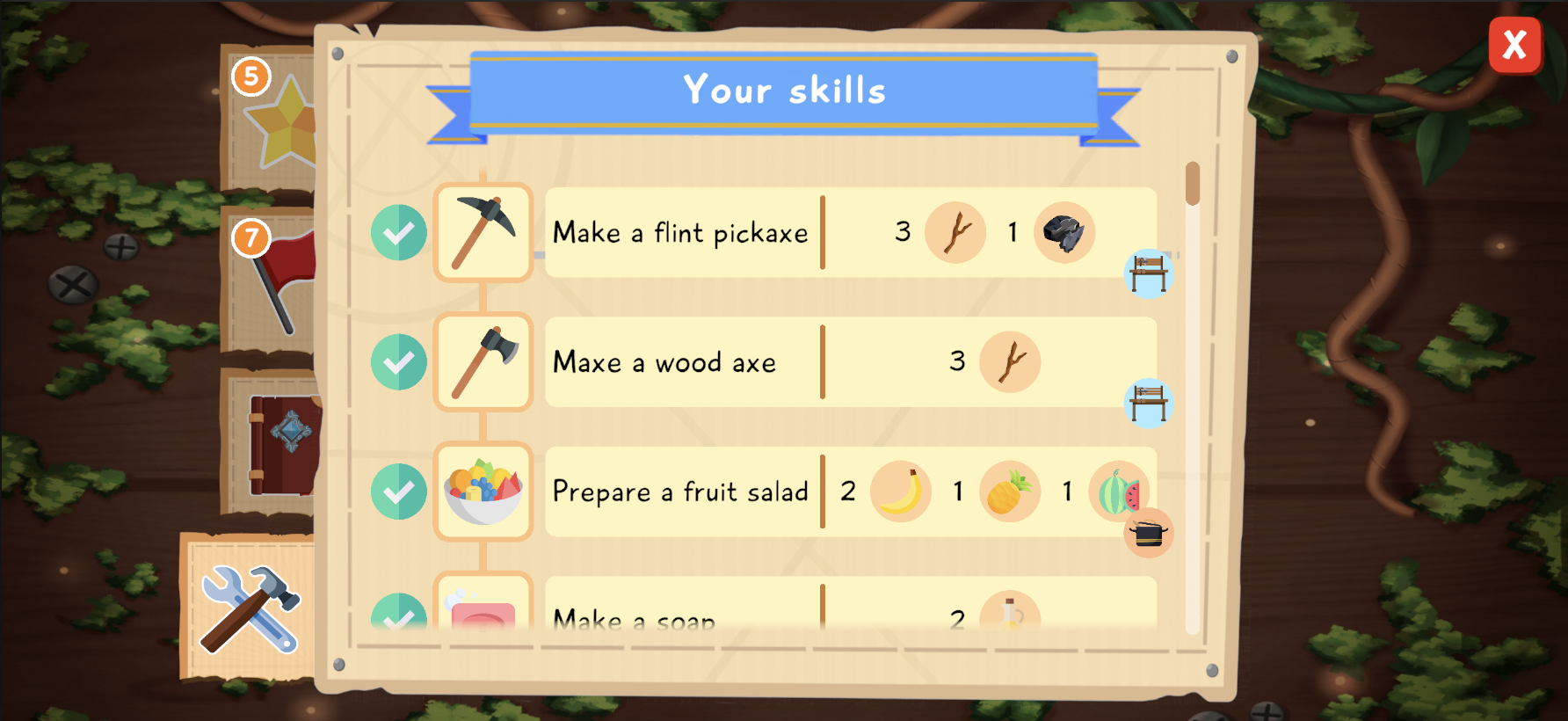
It gradually unlocks new crafting or preparation skills, for example creating tools, preparing dishes, or making clothes.
Knowledge can increase in several ways:
- by completing routines;
- by listening to Igor’s advice;
- by helping Luya statues;
- by eating certain rare foods.
Main Places
Section titled “Main Places”Lusha is organized around several recurring places. Each one has a function in the adventure and in the player’s progression.
The Camp
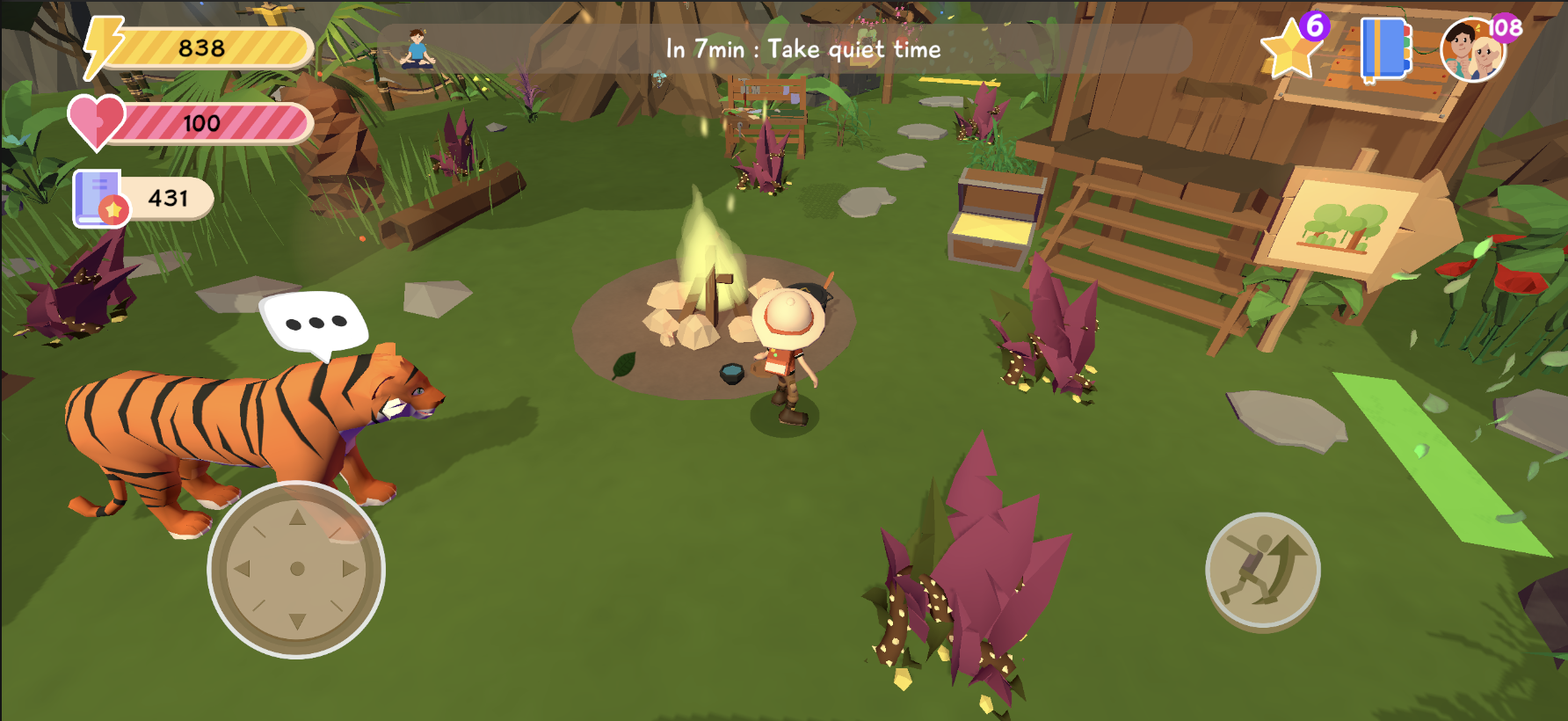
Section titled “The Camp”The camp is the player’s base. It is where they return between explorations, store items, improve their setup, craft some elements, and find familiar landmarks.
The player can notably meet Tigum, Igor, and a Luya statue there. This statue offers a daily challenge once it has been reactivated.
As the adventure progresses, the camp can be maintained, repaired, and improved. The campfire, workbench, chest, house, vegetable garden, and explorer’s journal give the player concrete and regular goals.
Tara’s School
Section titled “Tara’s School”Tara’s School is the place dedicated to psychoeducational learning. The child follows lessons, stories, and quizzes, then can reuse what they learned in certain quests.
For more details, see Tara’s School.
The Cabin
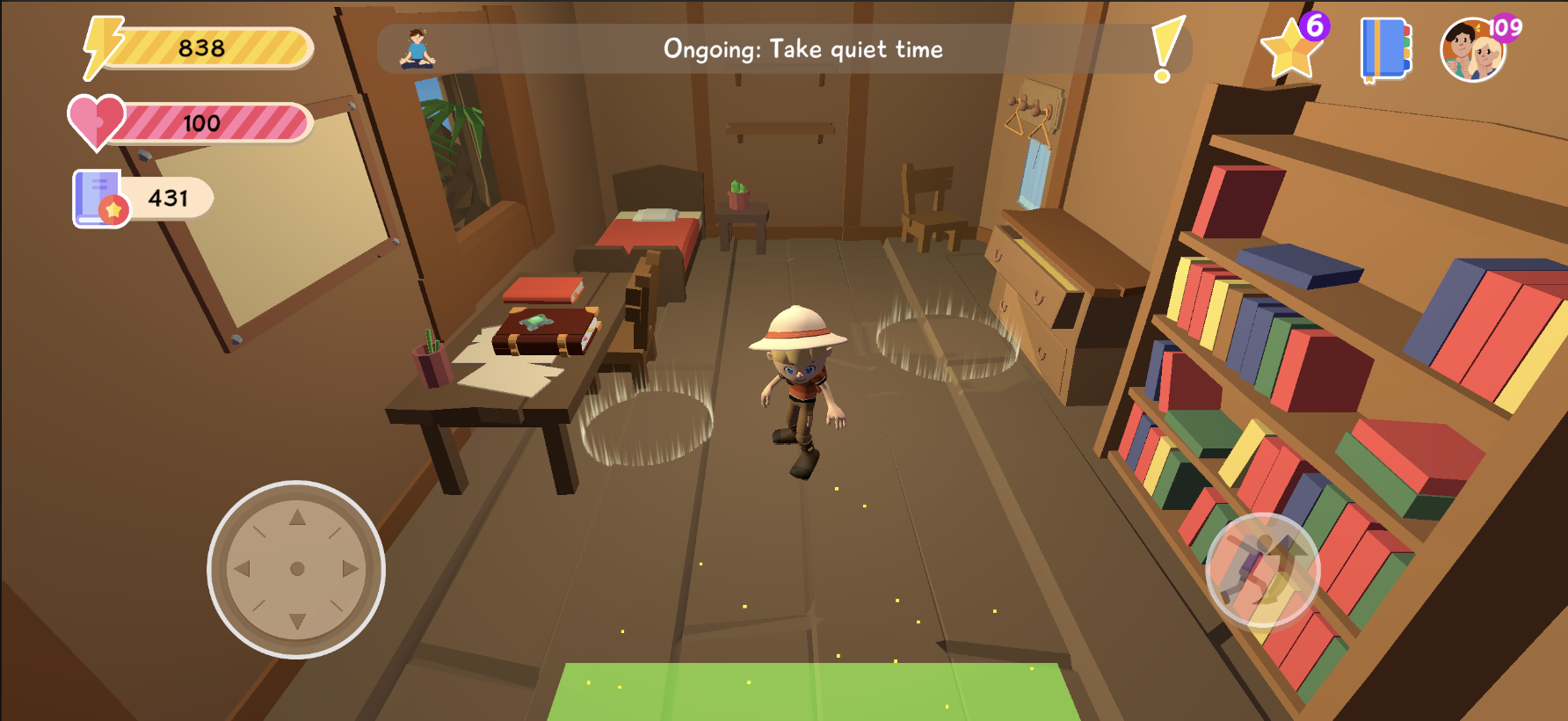
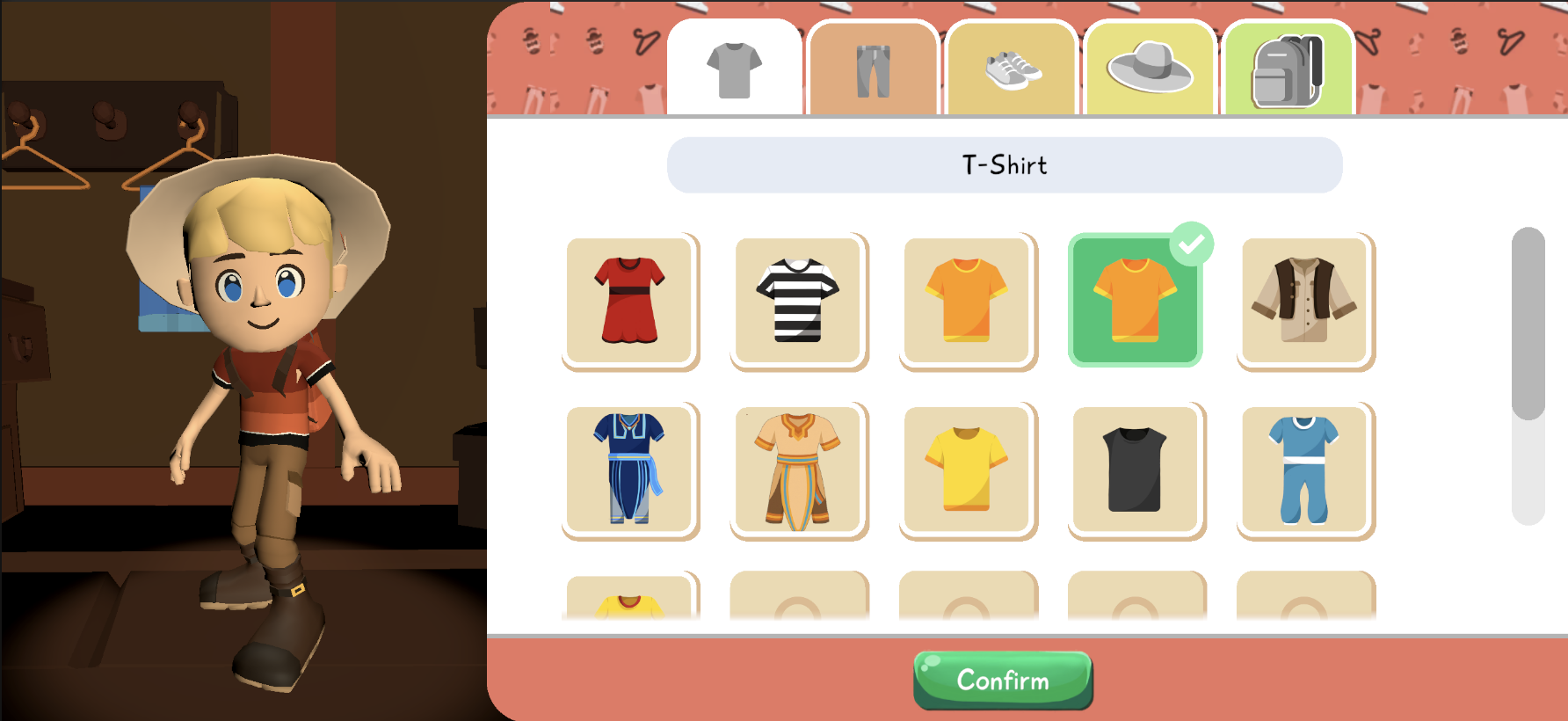
Section titled “The Cabin”The cabin is the old cabin built by Jane the explorer. It lets the player read the explorer’s journal and change the character’s clothes.
Pana’s House
Section titled “Pana’s House”Pana’s house is connected to clothing creation. The player can use Pana’s loom to make new clothes.
Collecting Items
Section titled “Collecting Items”Exploration lets the player find resources, food, rare items, customization elements, or narrative clues, such as pages from the explorer’s journal. Collection gives the player a reason to return to certain areas and encourages the child to observe the environment.
Collected items can be used to:
- craft tools or objects;
- repair camp elements;
- improve or customize the character;
- cook or maintain happiness;
- help a character in a quest;
- discover secrets about the jungle, magic, or the Luyas.
Not every element appears everywhere. Some resources are more common in one region than another. The player therefore benefits from remembering useful areas and returning later when a specific resource is needed.
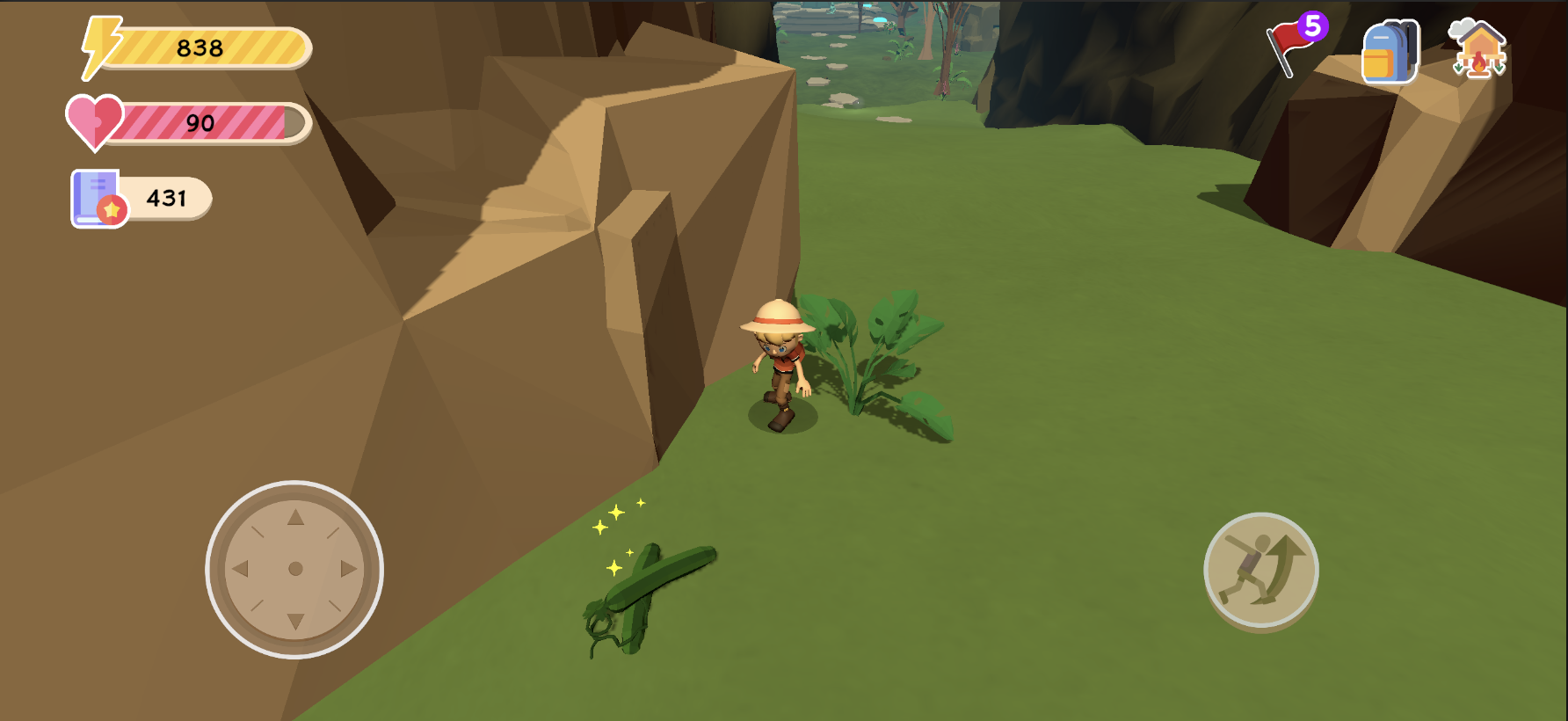
Collectible objects are often identifiable thanks to the small yellow stars that appear above them. This visual cue helps the player distinguish interactive elements from the scenery.
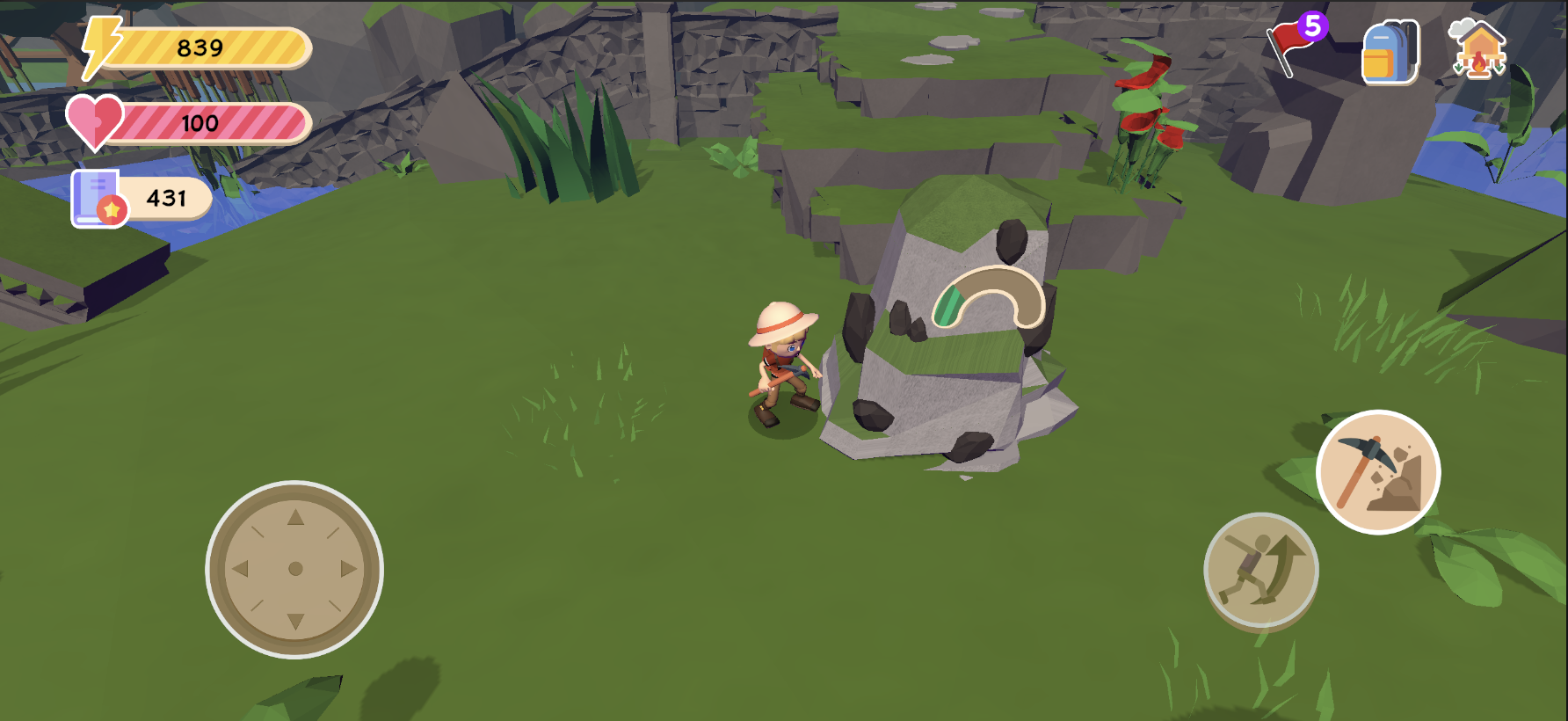
Some elements also require a tool to be collected. For example, ore requires a pickaxe. Other elements appear mainly when the character’s happiness is high.
Once collected, elements take some time to reappear. New resources generally appear the next day.
Using Tools
Section titled “Using Tools”Tools, such as the pickaxe or axe, are used to interact with the environment. They allow the player to collect certain resources, access objects, repair a structure, or destroy obstacles.
Using a tool generally requires happiness. Keeping happiness high is therefore important to continue exploring effectively and use tools when needed.
Crafting Objects
Section titled “Crafting Objects”Crafting transforms collected resources into useful objects. It gives jungle resources a concrete role: a resource can be used to create a tool, prepare a dish, make clothing, or contribute to a repair.
Crafting places do not all serve the same purpose. The workbench lets the player craft some objects and tools. The campfire or cooking areas let them prepare food. Pana’s loom is used to make clothes. Farther into the jungle, the Luya furnace allows the player to craft more advanced objects.
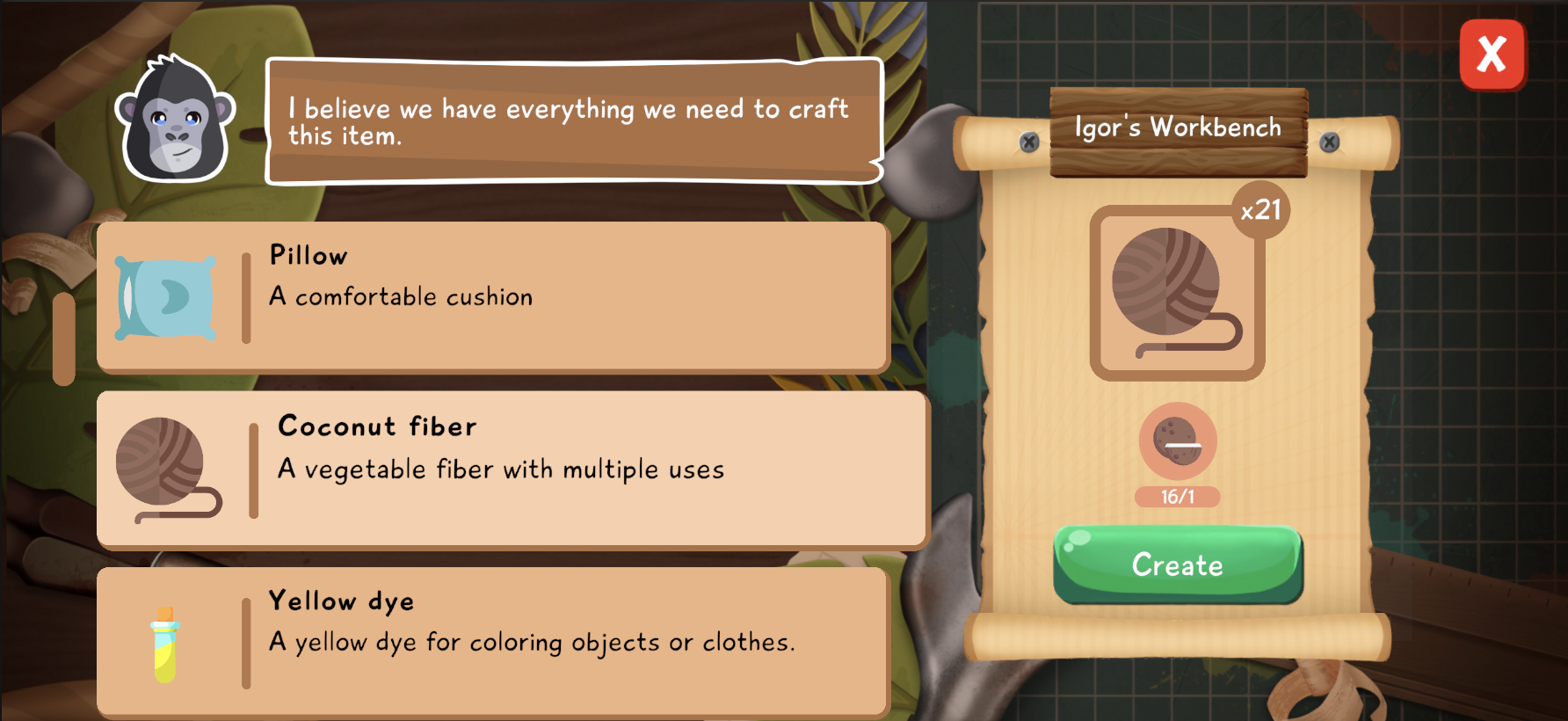
The character’s knowledge can gradually unlock new crafting options.
Building and Repairing
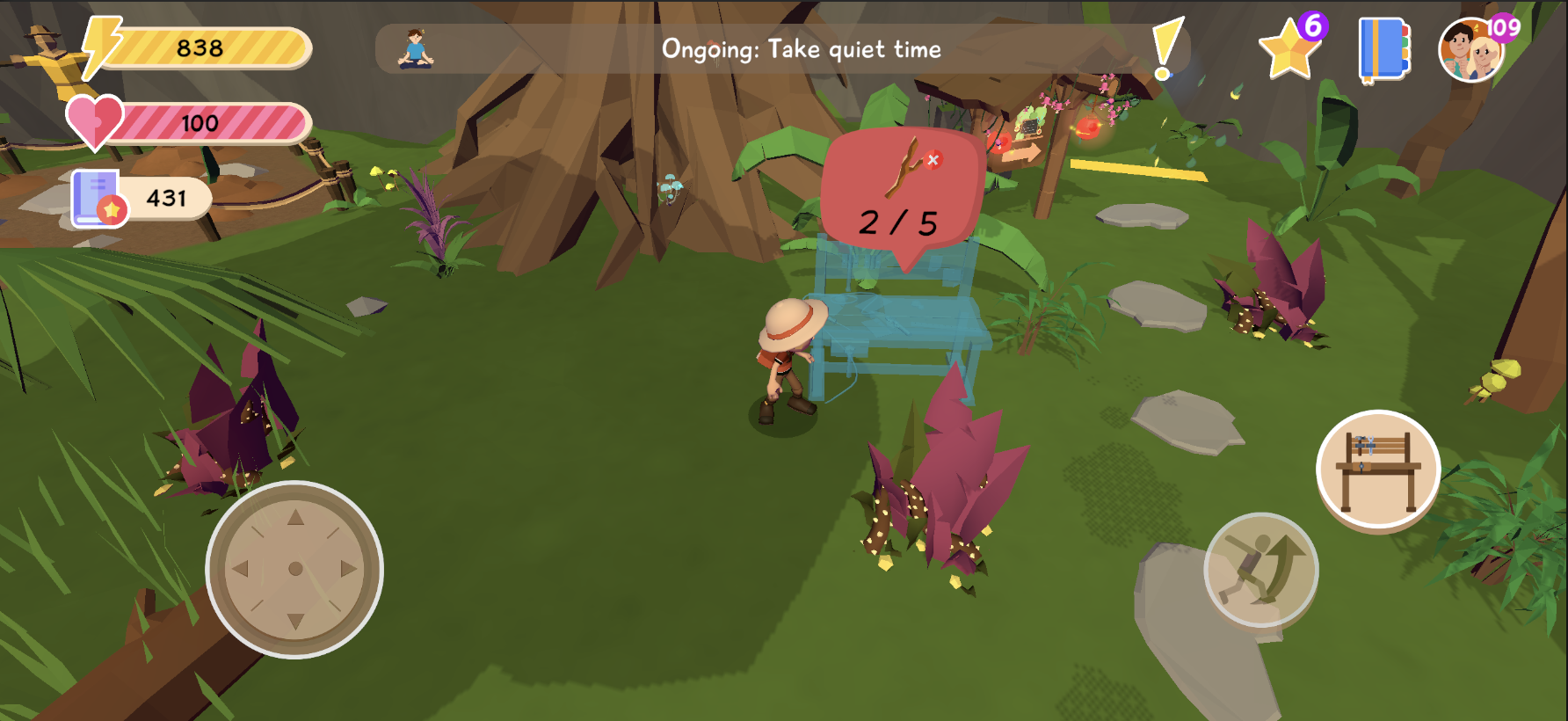
Section titled “Building and Repairing”Several elements in Lusha can be broken, incomplete, or ready to improve. To repair them, the player must bring the required resources. Each contribution makes progress visible: the object or building is rebuilt step by step.
This mechanic especially applies to the camp: campfire, chest, house, workbench, vegetable garden, and other installations. It gives the player concrete goals that are easy to understand and compatible with short sessions.
Repairing or building is not only decorative. It can unlock new uses, make the camp more useful, support the character’s happiness, or prepare access to other activities.
Statue Challenges
Section titled “Statue Challenges”Some ancient statues seem connected to Lusha’s magic and the Luya civilization. The player encounters them throughout their progression in the jungle.
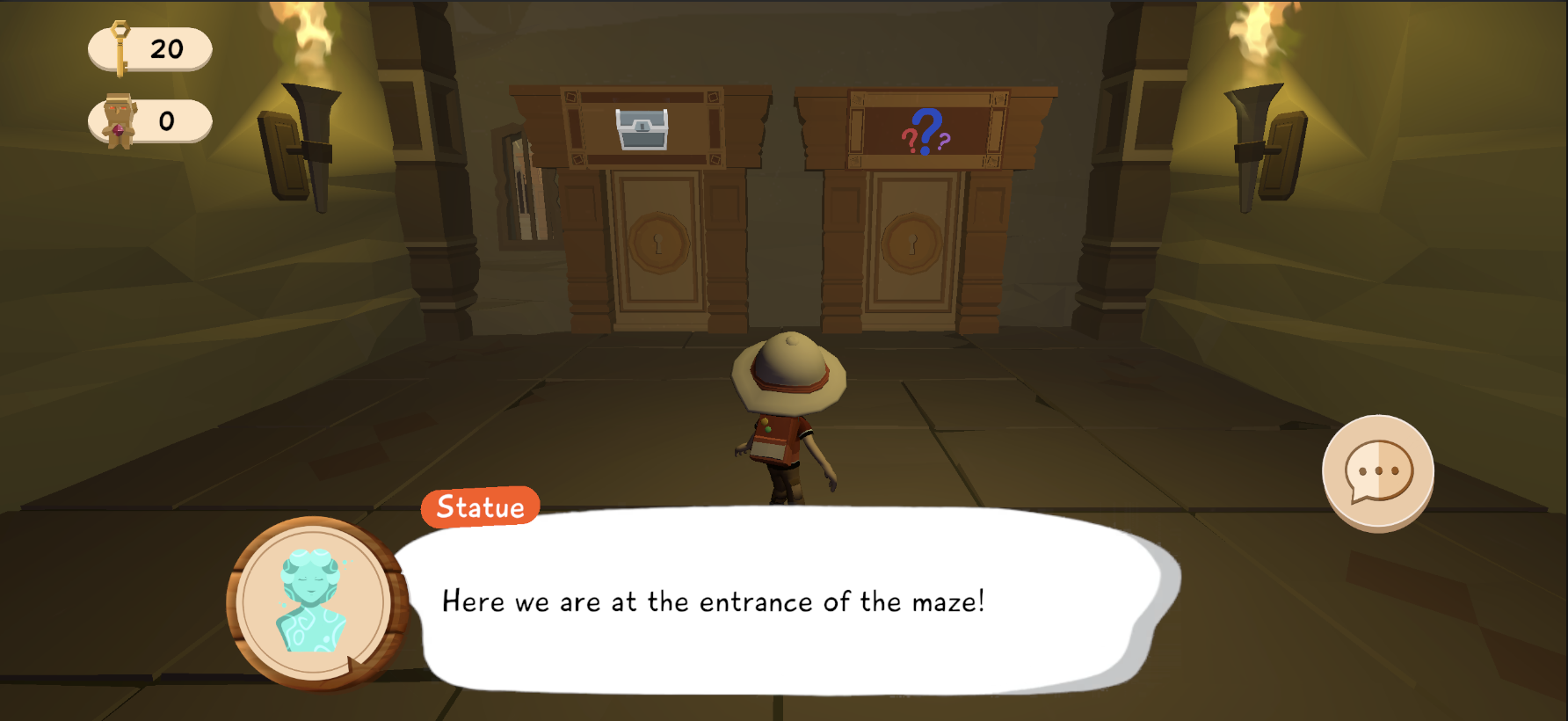
To fully reactivate a statue, the player must give it a magic stone. Once reactivated, the statue offers a daily challenge in the form of a short mini-game.
Each challenge lasts around 3 to 5 minutes, requires 1 energy point, and consumes it when launched. A small reward awaits the player after each challenge.
The Explorer’s Journal
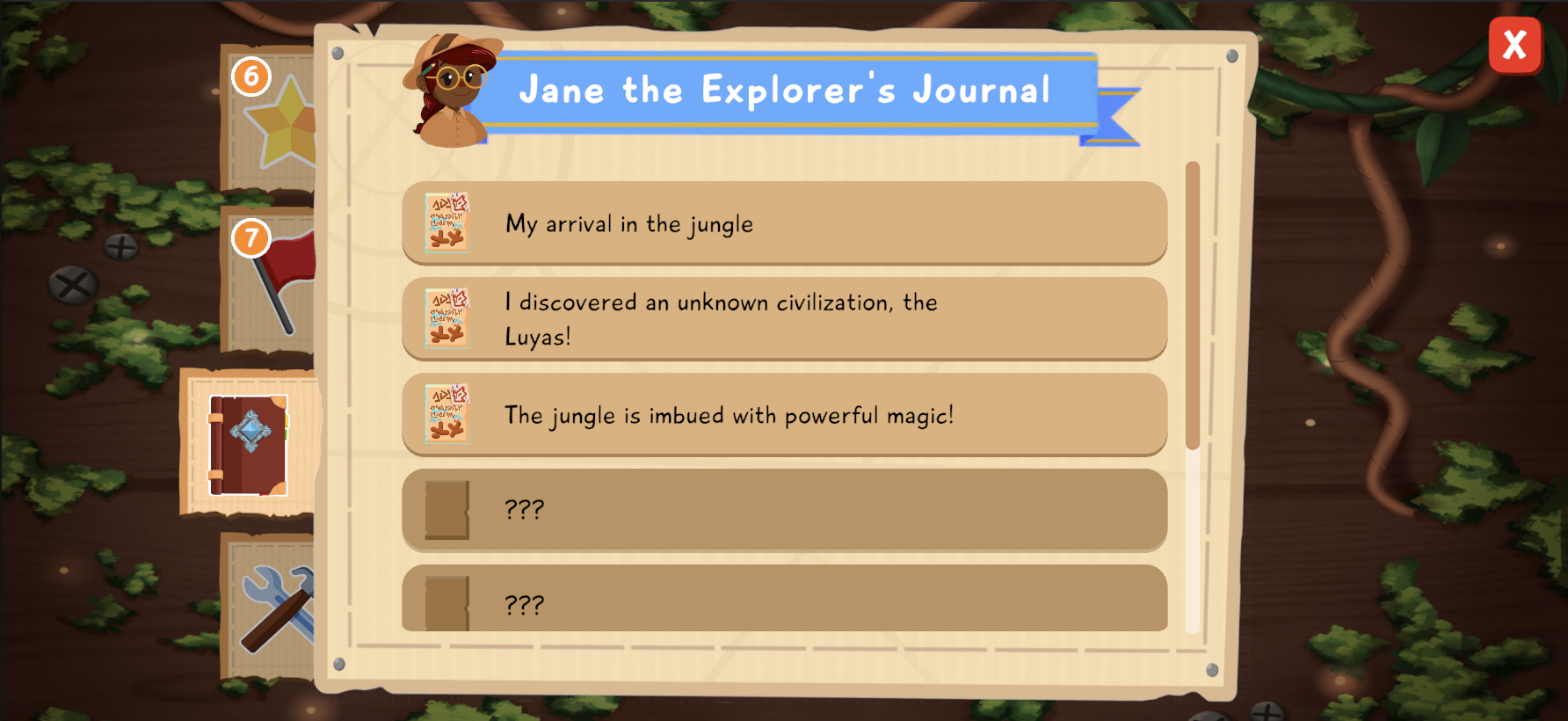
Section titled “The Explorer’s Journal”The explorer’s journal gathers traces left by an explorer who arrived in the jungle before the player. Its pages help explain the places, animals, ruins, portals, and ancient Luya civilization.
At first, the journal is incomplete. The player must find missing pages while exploring. Each page can bring a clue, an explanation, or a new question.
Finding a journal page also unlocks a unique reward.
Structured Progression
Section titled “Structured Progression”Lusha aims to offer motivating exploration without becoming an unlimited game. Energy, routines, mists, the camp, and parent validations structure the rhythm of play.
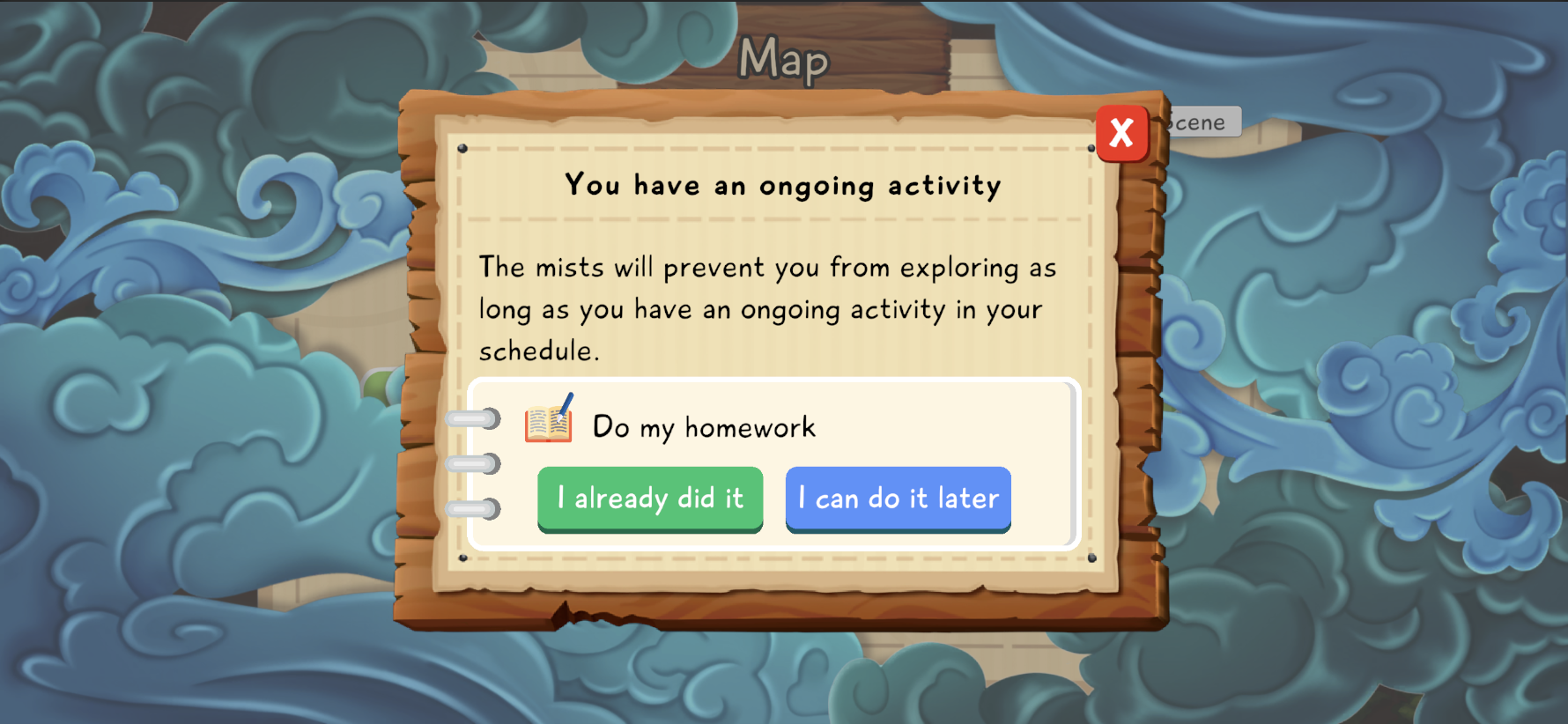
When a routine is about to start, mists can limit exploration and bring the child back to camp. This transition reminds the child that the jungle adventure remains connected to real-life responsibilities.
The player can therefore spend only limited time in the jungle. This time depends on available energy, which is connected to completed routines, the daily bonus, and progress in the game’s psychoeducational content.
Progression is therefore based on balance: the child explores, discovers, and builds, but regularly returns to routines, learning, and the landmarks defined with the parent.